
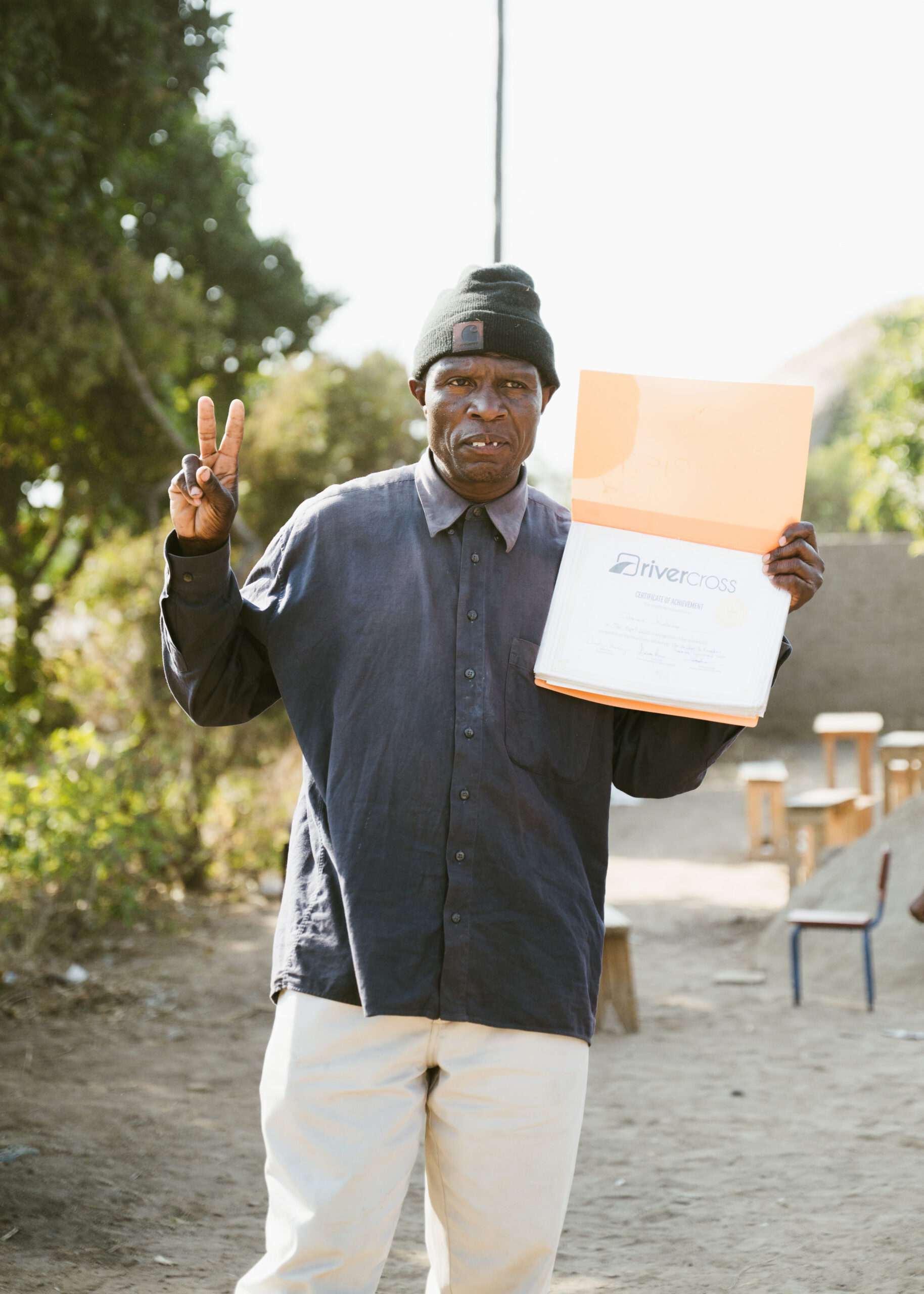
Because of the generosity of our partners, 32 organizational leaders and caregivers were trained and certified as RiverCross Facilitators at the RiverCross Summit in June. They’re now returning to their communities across eight African nations, equipped to lead RiverCross Clubs for vulnerable youth.
But what does that actually mean for a child sitting in a circle, week after week? Here’s a look at how training turns into healing.
What Is a RiverCross Club?
A RiverCross Club is a weekly gathering where vulnerable youth meet with a certified RiverCross Facilitator in a safe, caring environment. Every Club follows four simple elements—G.L.A.D.:
- Game — A fun activity that builds relationships and introduces the session’s theme.
- Listen — Youth listen to an episode of our audio drama, Bridge to Freedom, which tells authentic stories reflecting the realities faced by vulnerable youth in under-resourced communities.
- Activity — Creative, experiential activities help participants process what they’ve heard and apply it to their own lives.
- Discussion — Facilitated conversation creates a safe place for youth to share their experiences, process adversity, and receive encouragement and support.
Our Model: Equip → Lead → Thrive
At RiverCross, we believe every child deserves to be treasured—and that true transformation begins with the people already in their lives. Our model is simple but powerful: Equip → Lead → Thrive. Healing flows through relationships, multiplying from one trained leader to the next as local leaders train, guide, and care for children within their own communities.
Trainers Equip. RiverCross Trainers conduct immersive, story-based workshops that help participants understand trauma, resilience, and healing through the lens of Scripture. Facilitators learn how to use Bridge to Freedom to establish RiverCross Clubs.
Facilitators Lead. Once equipped in the RiverCross method, Facilitators can lead Clubs using any RiverCross program, including Bridge to Freedom. Additional audio dramas—like Jabota Bridge and future series—build on the same proven framework, giving leaders flexibility to serve their communities with relevant, Christ-centered stories.
Children Thrive. As caregivers grow and children are protected, communities begin to thrive. Churches, schools, and families become centers of flourishing, where children are treasured and trauma is no longer accepted as a way of life.
What Happens After Training?
Certification at Summit is just the beginning. Every newly trained organization begins by leading a 15-week RiverCross Club pilot. Throughout the pilot, they collect feedback before, during, and after the program, allowing us to measure outcomes and help each organization determine whether RiverCross should become a permanent part of their ministry.
Organizations that demonstrate strong implementation can then continue as RiverCross partners—strengthening their existing Clubs, training additional Facilitators, or even developing their own RiverCross Trainers to equip others within their organization. This is how one trained leader becomes many, and how healing multiplies across a community over time.
Why Does This Matter?
Our research continues to show that when vulnerable youth participate in RiverCross Clubs led by trained Facilitators, they are more likely to:
- Safely disclose trauma
- Advocate for themselves and their peers
- Develop practical skills that increase their safety
- Discover that they are loved, treasured, and never alone in Christ
Because of the support of our donors and advocates, vulnerable youth across eight African nations now have the opportunity to experience this kind of healing and hope—not as a one-time event, but as an ongoing, multiplying work carried forward by the leaders already serving in their communities.